YouTube Reused Content Rules: What Shorts Creators Can Repost
Quick answerYouTube can remove monetization from a whole channel for reused content: material from YouTube or elsewhere posted without significant original commentary, substantive edits, or educational or entertainment value. Reposting clips unchanged is not allowed, even with the original creator's permission. To stay safe, add your own voice, story or edits so the difference from the source is clear to a viewer.
What does YouTube count as reused content?
YouTube's help page describes reused content as material taken from YouTube or other online sources and republished without significant original commentary, substantive changes, or educational or entertainment value. Reviewers look at your videos, titles and descriptions to see how you made or presented the content.
The penalty is large. YouTube says monetization can be removed from the whole channel, and this applies even when you have the original creator's permission.
What changes make a clip your own?
YouTube says reused material can still be monetized if viewers can clearly see a meaningful difference from the original. The help page lists these kinds of change:
- Adding a funny, thoughtful or critical perspective.
- Re-editing footage heavily, such as adding a storyline, commentary, or audio and visual effects.
- Rewriting dialogue or replacing the voiceover.
- Appearing on camera or explaining what you added.
What is allowed and what is not?
| Usually fine | Likely a problem |
|---|---|
| Clips used in a critical review | Show or movie clips strung together with little narrative |
| Reaction videos with spoken commentary | Clips reposted from other social sites |
| Shorts remixes that add original content to a song or clip | Content copied or downloaded with no real changes |
| Replays that explain what happened | Videos that rely mainly on silent reactions |
Did the rules change in 2026?
YouTube's page says the repetitious content policy was renamed "inauthentic content" in July 2025, and that the reused content policy itself did not change. The inauthentic content rule covers mass-produced or templated videos, including AI content without your own perspective.
Stack Influence's creator roundup, published on November 4, 2026, reports that YouTube updated Shorts recommendations on October 1 to favor original content and cut reach for channels that mostly re-upload other people's videos. It says voice-overs, minor technical edits and template-based bulk changes do not count as original. That page is inconsistent about the exact date, and it is a third-party summary, so treat the details as reported.
What does this mean for UGC creators?
Many UGC creators repost their brand videos on their own channels. Before you do, check three things:
- Your contract. You may not be allowed to post the brand's video at all. See our guide on UGC usage rights.
- Your own edit. Posting the same file you delivered, with nothing added, looks like reused content. Add a voice-over, a behind-the-scenes story or a how-I-made-it angle.
- Repeats. Ten near-identical videos with only the product swapped can look mass-produced.
If you are chasing Shorts income, read our guide on YouTube Shorts monetization changes too.
Turn views into bookings with a real portfolio.
Every template is a finished UGC portfolio. Preview it live, then make it yours.
See all templates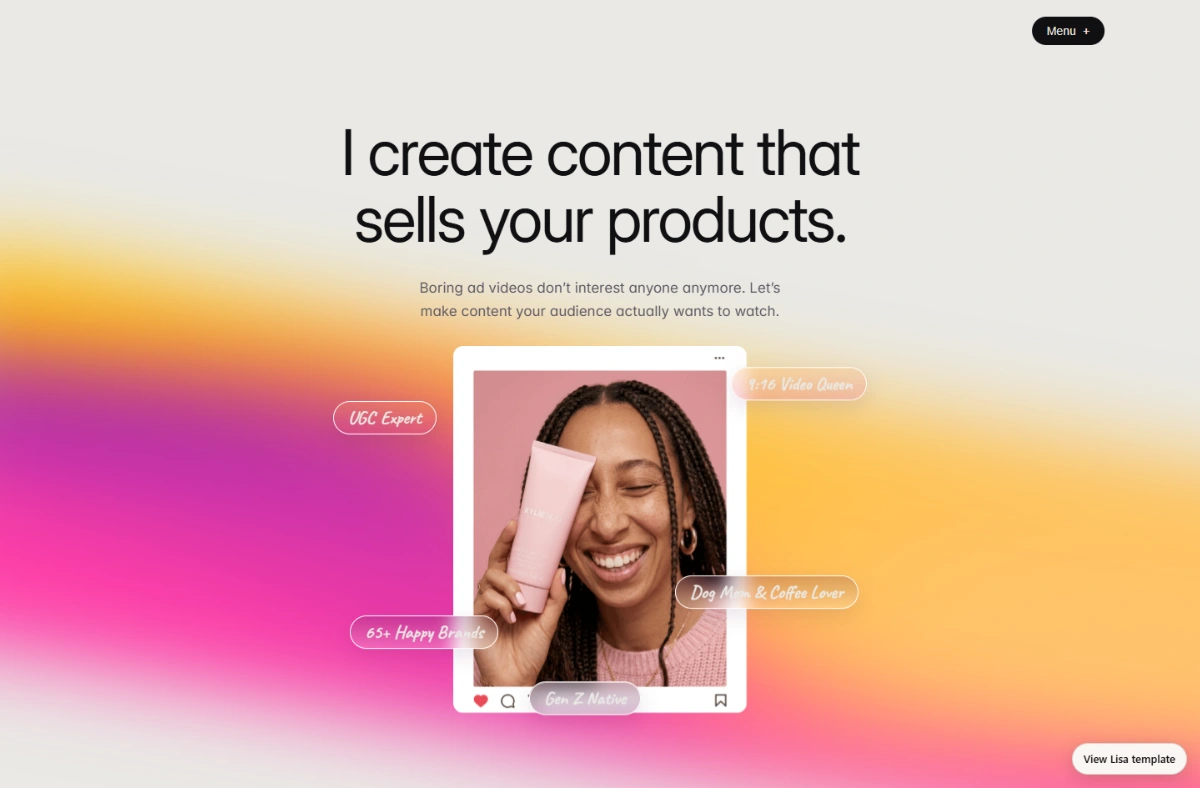
Template files $39 once · Full setup and hosting $149 today, then $10/month
FAQ
Can I repost a brand video I made on my YouTube channel?
Check your contract first. If it is allowed, add something of your own, such as a voice-over or story, so it is not an unchanged copy.
Does permission from the original creator protect me?
No. YouTube's help page says the reused content policy applies even when you have the original creator's permission.
What happens if a channel breaks the policy?
YouTube says monetization can be removed from the whole channel.
Sources
Keep reading
 Guide
YouTube Shorts Pay Changes in February 2027: What Creators Should Do
From February 2027, YouTube requires 10M Shorts views every 90 days to share in Shorts ad revenue. What changes, who is affected and what to do.
 Guide
UGC Usage Rights Explained: What to Charge When Your Video Runs as Ad
Brands running your UGC as an ad should pay more than for an organic post. Here is how usage rights work, typical 2027 add-on prices and what to put in writing.
 Guide
YouTube Shorts Series and Microdramas: What Creators Should Know
What YouTube Shorts series is, the 6.5 billion microdrama views YouTube reported, creator tips from its blog, and what is still unclear about earnings.